Did you know that even a 1% deviation in tuning can make your guitar sound noticeably off?
I’ve spent countless hours testing various guitar tuners, and I’m here to help you make the right choice!
Whether you’re a beginner strumming your first guitar chords or a seasoned pro getting ready for a gig, having a reliable guitar tuner is absolutely essential.
In this comprehensive guide, we’ll explore the best guitar tuners available in 2024, helping you find the perfect match for your musical journey.
Understanding Different Types of Guitar Tuners
Nailing down the right guitar tuner can seriously crank up your playing.
Let’s chat about the types out there, their ups and downs, and where they fit best in your music life.
Detailed Comparison of Clip-on vs. Pedal vs. Handheld Tuners
Clip-on Guitar Tuners

If keeping things simple and mobile is your jam, clip-on tuners are spot-on.
They stick right on your guitar’s headstock and pick up the vibrations directly.
- Perks: Super user-friendly and easy to stash in a bag, great for jamming at home.
- Bummers: Can be a little flaky when it’s noisy around you.
- Price: $10 – $50.
Pedal Guitar Tuners

For the stage performers, pedal tuners are your trusty sidekick.
They plug right into your guitar, so you know you’re getting the right pitch every time.
- Perks: Spot-on tuning, great for gigs, won’t mess with your tone, plus you can tune quietly.
- Bummers: Not as easy to lug around—you’ll need a pedalboard.
- Price: $50 – $200.
Handheld Guitar Tuners
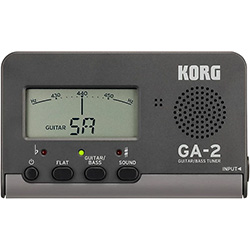
Versatile and with built-in mics, handheld tuners can handle more than just guitars.
- Perks: Can tune a bunch of different string instruments.
- Bummers: A bit clunky when you’re on stage.
- Price: $20 – $70.
Pros and Cons of Each Type
| Type of Tuner | Perks | Bummers |
|---|---|---|
| Clip-on | Easy to carry, budget-friendly | Noisy spots can be tricky |
| Pedal | Accurate, built for performers, keeps sound pristine | Need a pedalboard |
| Handheld | Flexible, multiple instruments | Not stage-friendly |
Typical Price Ranges and Value Considerations
| Tuner Type | Price |
|---|---|
| Clip-on Tuners | $10 – $50 |
| Pedal Tuners | $50 – $200 |
| Handheld Tuners | $20 – $70 |
No matter your budget, there’s something for everyone.
Clip-on tuners are for the thrifty or learners, while pedal tuners are for those rocking the stage.
Use Cases for Different Playing Scenarios (Practice, Live Performance, Recording)
- Practice: Clip-on tuners are your best friend at home.
- Live Jams: Pedal tuners give you the precision and clarity you need under the spotlight.
- Recording: Either handheld or pedal tuners ensure your sound is studio-grade.
Latest Technological Advancements in Tuner Technology
Today’s tuners are pretty darn clever:
- Polyphonic Tuning: Tune all guitar strings together, making practice a breeze.
- High-Tech Displays: LCD and LED screens make sure you won’t miss a thing.
- Multi-Mode Magic: Options like standard, chromatic, drop-D—and more.
Polyphonic wonders, whether pedal or clip-on, are changing the game.
They make tuning quick and hassle-free, giving you more time to play your heart out.
Best Clip-On Guitar Tuners for 2024
Clip-on guitar tuners are a real lifesaver, letting you tune up fast without needing a pedal board or separate gizmo.
Let’s chat about the best clip-on tuners cruising into 2024.
Detailed Review of the TC Electronic PolyTune Clip

The TC Electronic PolyTune Clip really shines with its pinpoint tuning accuracy and snazzy polyphonic mode.
It’s got a sleek look and a super bright display, making it simple to use even when the lights are low.
- Accuracy: Spot-on at ±0.02 cents in strobe mode
- Display: Lights up with an ultra-bright LED
- Battery Life: Chalks up to 18 hours
A big plus? The PolyTune Clip can handle both chromatic and polyphonic tuning, so whether you want to tune ’em all at once or one at a time, this tuner’s got you covered.
Analysis of the D’Addario NS Micro

D’Addario NS Micro is famous for keeping things low-key with its sleek design and flexible use.
The bright screen and lightweight build make it a go-to for guitar necks everywhere.
- Accuracy: Decent at ±0.3 cents
- Display: Cool tri-color backlit screen
- Battery Life: Lasts over 24 hours
It’s got a swiveling head that moves 360 degrees, perfect for snagging the best view of the display.
Overview of the Super Snark 3
The Super Snark 3 strikes a good balance between what you get and what you pay.
Its bright display and tuning accuracy make it a solid pick.
- Accuracy: Reliable at ±1 cent
- Display: Packs a punch with a full-color display
- Battery Life: Hangs in there for up to 11 hours
With a nifty ball joint providing full spin action, you can check out the display from every angle.
Guitarists love its quick response and trustworthiness.
Features Comparison
| Feature | TC Electronic PolyTune Clip | D’Addario NS Micro | Snark SN-8 Super Tight |
|---|---|---|---|
| Accuracy | ±0.02 cents | ±0.3 cents | ±1 cent |
| Display | Ultra-bright LED | Tri-color backlit | Full-color display |
| Battery Life | Up to 18 hours | Over 24 hours | Up to 11 hours |
| Special Features | Polyphonic tuning | 360-degree swivel | Fast response |
Price-to-Performance Ratio Evaluation
Weighing features and price tags, the D’Addario NS Micro wins the prize for giving you a lot of bang for your buck.
The TC Electronic PolyTune Clip is the go-to for folks who need pro-grade precision, making it a worthy investment.
Meanwhile, the Snark SN-8 Super Tight holds its ground with dependable performance that’s kind to your wallet.
- D’Addario NS Micro: Best for versatility and wallet-friendliness
- TC Electronic PolyTune Clip: Champion of pro-level accuracy
- Snark SN-8 Super Tight: King of budget-friendly tuners
Which tuner fits the bill depends on whether you’re jamming with friends, hitting the stage, or laying down tracks in the studio.
Each one’s got its perks, so there’s a great match for every guitarist’s wish list.
Best Pedal Tuners for Professional Musicians
When you’re out there chasing the perfect sound, having a solid pedal tuner is like having a trusty sidekick on your quest for sonic perfection.
Let’s break down some of the best pedal tuners musicians are raving about in 2024.
In-depth look at the Boss TU-3
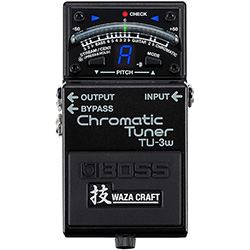
We’ve got a soft spot for the Boss TU-3, and it’s no surprise. It’s like the beefy uncle of pedal tuners—sturdy and always reliable.
This bad boy tunes with an accuracy of +/-1 cent, so whether you’re on stage or jamming in the garage, it’s got your back.
The ‘Accu-Pitch’ feature and buffered bypass mode keep your tunes in top shape, ensuring your jam stays crispy and clear.
| Feature | Boss TU-3 |
|---|---|
| Accuracy | +/- 1 cent |
| Bypass Mode | Buffered |
| Display | 21-segment LED |
| Additional Features | Accu-Pitch, Chromatic mode |
| Durability | High |
Review of the Peterson StroboStomp HD
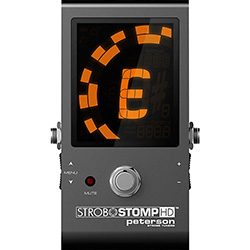
Enter the Peterson StroboStomp HD, a techie’s dream.
With mind-blowing 0.1 cent accuracy, it’s no wonder pros and tech gurus love it.
It’s like your nerdy friend who wins every trivia night.
The StroboStomp comes with a bright, customizable LED display and true bypass, so your sound remains untouched while you rock on.
| Feature | Peterson StroboStomp HD |
|---|---|
| Accuracy | 0.1 cent |
| Bypass Mode | True bypass |
| Display | HD, Customizable LED |
| Additional Features | Sweetened tunings, Strobe |
| Durability | High |
Analysis of the Polytune 3 Mini
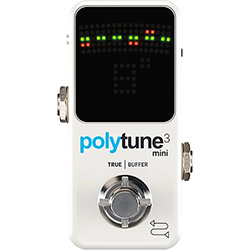
The TC Electronic PolyTune 3 Mini is like your tiny but mighty buddy who packs a punch.
It’s got this cool polyphonic tuning feature—showing you where your strings stand all at once.
Perfect for when you’re in the heat of a jam session and need something small that can fit anywhere, yet powerful enough to tune with precision.
| Feature | Polytune 3 Mini |
|---|---|
| Accuracy | +/- 0.5 cent |
| Bypass Mode | True bypass |
| Display | Ultra-bright LED |
| Additional Features | Polyphonic tuning |
| Durability | High |
Comparison of Bypass Options
Bypass modes are like those secret glue guys on a basketball team—small, but keep everything running smoothly.
Let’s see whose bypass keeps the dream alive:
| Tuner | Bypass Mode |
|---|---|
| Boss TU-3 | Buffered |
| Peterson StroboStomp HD | True bypass |
| Polytune 3 Mini | True bypass |
Stage Visibility Features
You know how Superman has eagle vision? Stage visibility kind of needs that superhero edge.
Here’s how these tuners handle the spotlight (literally):
- Boss TU-3: Has 21-segment LED display with a mode so bright even your sunglasses might need sunglasses.
- Peterson StroboStomp HD: Boasts a customizable HD display that’s visible in all sorts of lighting, from cool club atmospheres to outdoor extravaganzas.
- Polytune 3 Mini: Features an ultra-bright LED, so whether it’s the jarring darkness or blinding light, you’re good to go.
Durability and Reliability Factors
Heading to gigs and roughhousing with gear is all part of a musician’s life.
These tuners need to keep up:
- Boss TU-3: Known for its indestructible build and Boss’s never-let-you-down reputation. It’s like the Bear Grylls of pedal tuners.
- Peterson StroboStomp HD: Wrapped in a metal casing that’s just ready to tango with the demands of the road.
- Polytune 3 Mini: While it’s compact, it’s hardcore in handling the hustle of gigs.
These pedal tuners pack a punch in features and durability, crucial for any pro out there looking to keep their tunes pitch-perfect.
Top Smartphone Apps and Software Tuners
Getting your guitar in tune nowadays is a breeze with all the smartphone apps and software tuners at your fingertips.
In this section, we’re going to chat about some of the best free tuning apps, throw in a few high-end picks, see how these apps stack up against real hardware tuners, chew over their ease-of-use versus reliability, and check out how they play nice with other music apps.
Review of Best Free Tuning Apps
Let’s kick things off with GuitarTuna, a crowd favorite.
People love its easy-breezy design, and it uses your phone’s mic with a bit of tech magic to cut out noise, ensuring you get the right pitch every time.
Whether you’re strumming a guitar, a bass, or plucking a ukulele, this app’s got you covered. The fact that it’s free is just the cherry on top.
Here’s the scoop on some other free options:
- Online Guitar Tuner : Real-time pitch detection using advanced Web Audio API,Multiple instruments supported – guitar, bass, ukulele, mandolin. All the tunings you need – standard, drop D, open G, DADGAD. Works on any device – phone, tablet, desktop. Completely free – no downloads, no accounts, no BS
- AP Tuner: Offers a no-frills, accurate chromatic tuner that’s as straightforward as they come.
- Fender Tune: This one’s got multiple tuning modes and lets you play around with different tunings without breaking a sweat.
Premium App Recommendations
Got some cash burning a hole in your pocket? Consider these premium tuning apps for more bang:
- iStroboSoft by Peterson: Known for its pinpoint strobe accuracy, which audiophiles and pros will appreciate.
- Cleartune: Ideal for those who want a sleek tuning experience with top-notch pitch detection and custom settings.
| App Name | Price | Features |
|---|---|---|
| GuitarTuna | Free | Chromatic tuner, noise cancellation, multi-instrument fun |
| AP Tuner | Free | No-nonsense interface, precise tuning |
| Fender Tune | Free | Versatile modes, alternate tunings |
| iStroboSoft | $9.99 | Spot-on accuracy, tweakable settings |
| Cleartune | $3.99 | Advanced detection, adjust temperaments |
Accuracy Comparison with Hardware Tuners
While app tuners are handy, they’re not always spot-on like hardware ones.
Those boxy devices pack a real punch in accuracy, thanks to better processing power and fancy sensors.
When playing for a crowd, hardware tuners won’t let you down, while apps might get thrown off by background noise.
| Tuning Type | Precision Level | Perfect For |
|---|---|---|
| Smartphone Apps | Pretty Good | Jamming at home, casual use |
| Hardware Tuners | Top-notch | Live shows, serious recordings |
Convenience vs. Reliability Discussion
Apps win hands down if you want convenience. They fit right in your pocket and often double as metronomes or chord guides.
The downside? They can falter in noisy settings.
Hardware tuners, though maybe bulkier, are built for reliability in those situations.
Integration with Other Music Apps
Tuner apps often play nice with other music apps, making life easier for musicians.
Like how GuitarTuna and Fender Tune throw in extra goodies like metronomes and practice tools.
It’s like having a mini-band all-in-one, keeping everything you need within reach, making your jam sessions and practice more seamless and fun.
Whether we’re just messing around at home, on stage, or laying down tracks in the studio, these apps and tuners got something for everyone.
Key Features to Consider When Buying the Best Guitar Tuner
When it comes to finding the best guitar tuner, it’s all about knowing what matters most for your style and budget.
Here’s a look at the stuff that can make or break your tuning game.
Tuning Accuracy and Response Time
A tuner’s gotta have its act together to keep your music sounding sweet.
The Boss TU-3 Guitar Tuner’s got this tough-as-nails build and rocks it in live gigs with its improved tuning smarts.
If you’re all about precision, the Sonic Research Turbo Tuner ST-300, known for being crazy accurate, won’t let you down.
Display Quality and Visibility
Nobody wants to squint at a tiny screen mid-performance.
The Walrus Audio Canvas Tuner Pedal’s got your back with its big, colorful display that’s visible in any setting.
Meanwhile, the TC Electronic PolyTune 3’s bright screen and slick design won’t leave you in the dark.
Battery Life and Power Options
Don’t let your clip-on or handheld tuner run out of juice at the wrong moment.
The D’Addario NS Micro Universal is known for lasting long, and it’s got a stealthy look and flexible fitting.
Its ratchet clip and swivel head ensure it adapts without a fuss.
Durability and Build Quality
You need gear that can take a beating and keep on tuning. That’s where the Boss TU-3 shines—it’s rugged and reliable.
Live performers love its strong frame and trustworthy ‘Accu-Pitch’ feature that gets the job done.
Additional Features (Polyphonic Tuning, Different Tuning Modes)
Extra tricks up its sleeve can make a tuner more fun to use.
Take the TC Electronic PolyTune 3 Mini: it lets you check all strings at once with its polyphonic tuning.
It’s a must-have for guitar maestros who won’t settle for anything less than exact.
Price Point Considerations
Pinching pennies or ready to splurge? There’s something for everyone.
The Donner DT-1 Guitar Chromatic Auto Pedal Tuner offers solid performance without breaking the bank.
Its bright display and true bypass ensure your sound stays pristine on any budget.
| Tuner Model | Accuracy | Display Quality | Battery Life | Durability | Additional Features | Price |
|---|---|---|---|---|---|---|
| Boss TU-3 | High | Good | N/A | Excellent | Buffered bypass, ‘Accu-Pitch’ | Moderate |
| Sonic Research Turbo Tuner ST-300 | Very High | N/A | N/A | Excellent | Extreme precision | High |
| Walrus Audio Canvas Tuner Pedal | High | Excellent | N/A | Good | TuneAssist | High |
| TC Electronic PolyTune 3 | High | Excellent | N/A | Good | Polyphonic tuning | High |
| D’Addario NS Micro Universal | Moderate | Good | Excellent | Good | Flexible fitting | Low |
| Donner DT-1 | Moderate | Good | N/A | Good | Chromatic tuning mode, true bypass | Low |
Checking these out will help you find a tuner that hits all the right notes for you. Happy tuning!
How to Use Your Guitar Tuner Effectively
Here, we’ll show you how to really get cooking with your guitar tuner.
We’ll take you through tuning your guitar like a pro, what rookie mistakes to dodge, how to handle different settings, and keep things in tune even if you’re in the jungle!
Step-by-step Tuning Process
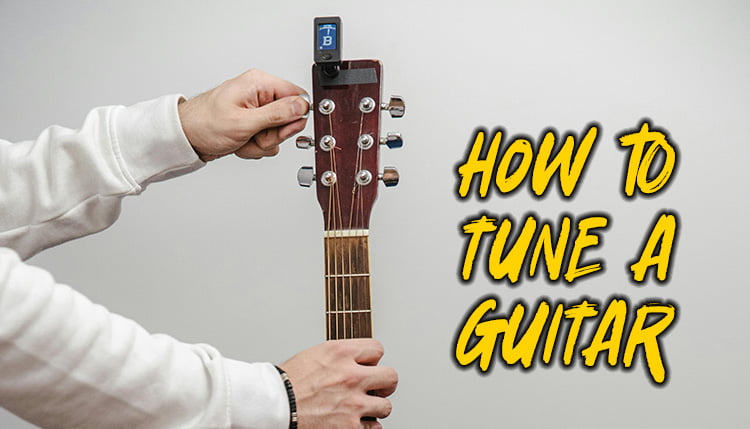
- Fire Up the Tuner: Make sure your tuner’s awake. If it’s a clip-on or handheld buddy, attach it close enough to catch those good vibes from your guitar.
- Put the Strings on Silent: Got a pedal tuner? Smash that pedal like a rockstar to mute your sound for stealth mode—a must-do at gigs.
- Pluck Away: Give the string you want to tune a good ol’ pluck, ideally near the 12th fret, for that sweet spot sound.
- Peek at the Display: Check out what the tuner’s screen is saying. Tweak the tuning peg until you hit that just right pitch.
- Rinse and Repeat: Run through the same jam for each string till they’re all in harmony.
Common Tuning Mistakes to Avoid
- Volume’s Your Friend: Don’t be shy with your guitar’s volume—it’s gotta be loud enough for the tuner to catch the signal.
- Avoid the Noise: If you’re using a clip-on, find a calm corner; outside noise can mess with the tuner’s mojo.
- No Hulk Strength: Go easy on tightening those strings unless you’re looking for a snap and crackle.
Tips for Different Playing Environments
- Practice Jams: Clip-ons or phone apps are nifty—keep it simple and light.
- Rocking the Stage: Pedal tuners are your roadies, keeping you tuned with a bright screen for those blinding stage lights and hush-hush tuning.
- In the Studio: Rack or ace pedal tuners will give you that pitch-perfect accuracy and clarity you crave.
Maintaining Tuning Stability
- String It Right: Invest in decent strings and swap them out regularly to keep the sound divine.
- Wrap Like a Pro: Pay mind to how you wrap your strings around the pegs; it’s trickier than it sounds.
- Mind the Air: Keep an eye on temperature and humidity; they’re sneaky culprits for tuning trips.
Alternative Tuning Options
Step away from the usual EADGBE and dive into some tunings that’ll make your music sing:
| Tuning | Notes | Style |
|---|---|---|
| Drop D | DADGBE | Metal, Rock |
| Open G | DGDGBD | Blues, Slide Guitar |
| DADGAD | DADGAD | Celtic, Folk |
| Half Step Down | EbAbDbGbBbEb | Blues, Classic Rock |
These tunings aren’t just fancy; they’ll open up whole new worlds of sound for you to explore and rock out to.
Mastering your guitar tuner brings your instrument to life, sounding its best whether you’re just strumming at home, taking the stage by storm, or laying down tracks.
Best Guitar Tuner Wrap Up
Finding the best guitar tuner doesn’t have to be complicated!
Consider your specific needs, playing style, and budget when making your choice.
Remember, a quality tuner is an investment in your sound and musical journey.
Ready to make your selection? Use our comprehensive guide above to find the perfect tuner for your needs!