Making a living as a musician has never been about one paycheck. Not for me, not for anyone I know who’s sustained a career in this industry. Over the past 25+ years, I’ve built income from music, film, acting, content, and a handful of other sources — and the mix has changed constantly depending on what opportunities were in front of me.
The artists I see struggling financially aren’t necessarily less talented than the ones doing well. They’re usually the ones relying too heavily on a single income stream — usually streaming — and ignoring everything else. The artists who build sustainable careers are the ones who diversify early and keep diversifying.
Here are the income streams for musicians that I’ve either personally earned from or watched other independent artists use successfully, ranked roughly by their potential impact.
1. Sync Licensing: The Biggest Checks Most Indie Artists Overlook
I’m putting this first because it’s the income stream with the highest ceiling for independent artists, and it’s the one most people either don’t know about or dismiss as unrealistic.
Sync licensing is when your music gets placed in visual media — TV shows, films, commercials, video games, podcasts, YouTube content. You get paid a sync fee upfront for the placement, and then you continue earning performance royalties every time that content airs.
Having worked in both music and the film industry (IMDB), I’ve seen both sides of this equation. Music supervisors are constantly looking for music that fits specific moods, scenes, and budgets. Major label tracks are expensive to license. Independent music is often more affordable and more flexible — which means indie artists have a real advantage in this space if they position themselves correctly.
A single sync placement in a national commercial can pay more than a year of streaming royalties. Even placements in smaller productions — indie films, web series, podcasts — generate revenue and expose your music to audiences who would never have found you through Spotify alone.
How to get started: Register with a PRO (ASCAP, BMI, or SESAC) so you can collect performance royalties from placements. Create instrumental versions of your tracks — music supervisors frequently need instrumentals. Make sure you own all rights to your recordings (no uncleared samples). Consider signing up with a sync licensing agency or music library that actively pitches to supervisors. And if you’re using CD Baby as your distributor, their sync program actively pitches their catalog to music supervisors on your behalf.
I wrote a complete breakdown in my sync licensing guide if you want to go deep on this.
2. Streaming Royalties: The Foundation, Not the Finish Line
Streaming is where most independent artists earn their first music income, and it’s the channel that drives discovery for everything else. My music is on Spotify, Apple Music, Amazon Music, TIDAL, and every other major platform through my distributor. Each platform generates royalties every time someone streams one of my tracks.
But here’s the reality: streaming pay rates are modest. Spotify pays roughly $0.003-$0.005 per stream. Apple Music pays about double that. Even at 10,000 streams per month on Spotify — which would be a solid month for many independent artists — you’re looking at $30-50. That’s not nothing, but it’s not a career.
The value of streaming isn’t the per-stream payout in isolation. It’s the compound effect: streams lead to followers, followers lead to Release Radar placements, algorithmic playlists lead to more streams, and all of that activity makes you more attractive to playlist curators, sync supervisors, and anyone else evaluating your viability as an artist. Streaming is the engine that drives discovery. The money comes from what that discovery enables.
How to maximize it: Release consistently (every 6-8 weeks), pitch to playlist curators, build your follower base, and be on every platform your distributor supports. Don’t leave money on TIDAL, Deezer, or Amazon just because you’re focused on Spotify. My release strategy guide covers the full process.
3. Live Performance: Still the Most Direct Connection to Fans

Live performance has been part of my career since the beginning — from small clubs in New Orleans to larger venues and events. It’s the income stream that puts you in front of real people, builds your most loyal fans, and generates revenue that hits your pocket immediately, not 60-90 days later like streaming royalties.
There are several types of live income:
Original music shows — club gigs, concerts, opening slots, festival appearances. The pay varies wildly depending on the venue, your draw, and the market. Early in your career, you might play for the door or a small guarantee. As you build a following, you can negotiate flat fees or guarantees plus a percentage of ticket sales.
Private events — weddings, corporate events, private parties. These tend to pay significantly more than club gigs because the client is paying for a specific service. I’ve known musicians who fund their original music careers entirely through private event income.
Session work — playing on other artists’ recordings or live shows. If you’re a skilled instrumentalist, session work can be steady income that keeps you playing and networking while you develop your own material.
How to price yourself: I built a gig revenue calculator to help artists think through the real costs and potential income from live shows. Factor in your travel, gear, rehearsal time, and the opportunity cost of your time. Don’t play for free unless there’s a clear strategic reason (like opening for an artist whose audience overlaps with yours).
4. Music Publishing: Getting Paid for What You Write
If you write your own songs, you’re not just a performing artist — you’re a songwriter and publisher. That means you’re entitled to an entirely separate set of royalties that many independent artists don’t collect because they don’t know they exist.
Here’s the simplified version: every song has two copyrights. The composition (the melody and lyrics you wrote) and the sound recording (the specific recording of that composition). Each generates its own royalties.
As an independent artist who writes and records your own music, you likely own both. But you need to actively collect from both sides:
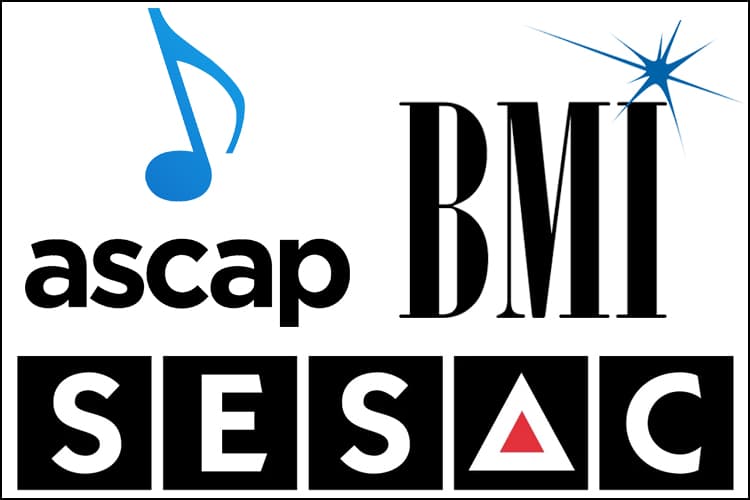
Performance royalties — collected by your PRO (ASCAP, BMI, or SESAC) when your music is played publicly. This includes streaming platforms, radio, TV, live venues, and businesses playing music. If you’re not registered with a PRO, you’re missing this income entirely.
Mechanical royalties — generated every time your composition is reproduced (including digital streams). In the US, these are collected by the Mechanical Licensing Collective (The MLC). Register at themlc.com.
Publishing administration — services like TuneCore’s publishing admin or Songtrust can collect both domestic and international publishing royalties on your behalf for a percentage. If your music gets any international streams at all, this is worth considering because collecting foreign royalties on your own is extremely complicated.
The publishing side of music income is quieter than streaming or live performance, but it compounds over time. Songs I registered years ago still generate small royalty payments every quarter. Over a career, those payments add up significantly.
5. Merchandise: Turning Fans Into Walking Billboards

Merch is one of the highest-margin income streams available to musicians. A t-shirt that costs you $8-12 to produce can sell for $25-35. A sticker that costs $0.50 can sell for $5. The math works in your favor in a way that streaming royalties simply don’t.
The key to merch that actually sells is design quality and brand alignment. Nobody wants a cheap t-shirt with a bad design. Invest in a good graphic designer (or develop your own design skills), print on quality materials, and create items your fans would actually want to wear or use — not just items with your name slapped on them.
Print-on-demand vs. inventory: When you’re starting out, print-on-demand services (like Printful or Merch by Amazon) let you sell merchandise without holding any inventory. You don’t pay for anything until someone orders. The margins are lower than buying in bulk, but you have zero upfront risk. As you grow and can predict demand, ordering inventory in bulk brings your per-unit cost down significantly.
Sell at shows and online. Merch sales at live shows are incredibly effective because fans are emotionally engaged and the purchase is immediate. But don’t ignore your website — an online store generates revenue 24/7 and reaches fans who might never attend a show.
6. Teaching and Consulting: Monetizing What You Know

After years of experience, you know things that other musicians need to learn. That knowledge has real value.
Private lessons — in-person or online music lessons are a steady, reliable income source. If you charge $50-100/hour and teach even 10 hours a week, that’s $2,000-4,000/month of predictable income while you build your other revenue streams. Platforms like Lessonface or TakeLessons can connect you with students, or you can build your own student base through your network and website.
Online courses — create once, sell indefinitely. If you have expertise in a specific area (production techniques, songwriting, a particular instrument, music business fundamentals), package it into a course and sell it through your website or platforms like Skillshare or Udemy. The upfront effort is significant, but the long-term passive income potential is real.
Consulting and mentoring — as your career develops, other artists will want to learn from your experience. One-on-one consulting on topics like release strategy, music business, or production can command premium rates. This is something I’ve grown into naturally through this site — sharing what I’ve learned attracts people who want more personalized guidance.
7. Crowdfunding and Fan Subscriptions: Direct Fan Support

The most significant shift in the music industry over the past decade has been the ability for fans to support artists directly, bypassing the traditional industry infrastructure entirely.
Crowdfunding — platforms like Kickstarter and Indiegogo let you fund specific projects (an album, a music video, a tour) by pre-selling the project to your fans before it exists. The key to a successful crowdfunding campaign is having an engaged audience before you launch. If you’re starting from zero followers and zero email subscribers, crowdfunding will be an uphill battle. But if you’ve built even a modest fanbase, the results can be powerful. Offer compelling tiers — signed physical copies, exclusive behind-the-scenes content, private performances, even songwriting sessions for top-tier backers.
Fan subscriptions — platforms like Patreon and Buy Me a Coffee let fans support you on an ongoing monthly basis in exchange for exclusive content. This creates predictable recurring revenue, which is something most musicians never have. Even 100 fans paying $5/month is $500/month of baseline income. The catch is that you need to deliver consistent value to keep subscribers engaged — behind-the-scenes content, early access to releases, exclusive tracks, Q&A sessions, whatever makes sense for your brand.
Direct support tools — newer options like Spotify’s “tip jar” feature and Bandcamp (where fans can pay above the asking price) provide additional ways for listeners to support you directly. Don’t underestimate how many fans are willing to pay more if you simply give them the option.
How to Think About Diversification
You don’t need to pursue all seven income streams at once. That’s a recipe for burnout and mediocrity across the board. Here’s how I’d prioritize based on where you are:
If you’re just starting out: Focus on making music and getting it distributed (streaming royalties). Register with a PRO (publishing). Start performing live wherever you can. Those three form the foundation.
Once you have a small following: Add playlist pitching to boost streaming. Start selling basic merchandise. Explore teaching if you have a marketable skill. Begin building an email list for direct fan communication.
As you grow: Pursue sync licensing opportunities. Consider crowdfunding or Patreon for specific projects. Look into publishing administration to collect international royalties. Explore consulting or online courses if you’ve built expertise others want to learn from.
The goal isn’t to maximize every income stream simultaneously. It’s to build a portfolio of revenue sources so that no single channel’s fluctuation can tank your finances. Some months, live performance carries you. Other months, a sync placement comes through. Streaming provides a steady baseline. Merch spikes around releases and holidays. Together, they create something sustainable.
I’ve been building this kind of diversified career for over two decades, and the mix is still evolving. That’s the nature of a career in music — it’s never static, and the artists who thrive are the ones who adapt.
Frequently Asked Questions
What’s the most profitable income stream for independent musicians?
On a per-opportunity basis, sync licensing has the highest potential payout. A single national commercial placement can generate tens of thousands of dollars. But it’s inconsistent — you might go months between placements. For steady, predictable income, a combination of live performance and teaching tends to be the most reliable for independent artists. Streaming provides the foundation for discovery but generates modest direct revenue unless you’re getting hundreds of thousands of monthly streams.
How much do musicians actually earn from streaming?
It varies dramatically. Spotify pays roughly $3,000-$5,000 per million streams. Most independent artists generate far less than a million streams per month. At 10,000 monthly Spotify streams, you’re earning approximately $30-50/month from that platform. The real value of streaming is the audience it builds, which then fuels ticket sales, merch purchases, sync opportunities, and direct fan support. I break down exact platform rates in my streaming pay rates guide.
Do I need to be a full-time musician to earn from these income streams?
Not at all. Most independent musicians I know built their income streams while working other jobs. The beauty of diversification is that each stream can start small and grow over time. You can teach a few lessons on weekends, sell merch through your website while you sleep, and collect streaming royalties passively — all while maintaining a day job. The transition to full-time music (if that’s your goal) usually happens gradually as the combined income from multiple streams reaches a livable threshold.
Should I sign with a label to access more income streams?
A label can provide access to larger sync opportunities, bigger marketing budgets, and established distribution channels. But you give up ownership, control, and a significant percentage of your revenue in return. For most independent artists, the trade-off isn’t worth it until you’ve built enough leverage to negotiate a favorable deal. You can access every income stream on this list as an independent artist — a label just amplifies some of them at the cost of your equity.
What’s the first income stream I should set up after releasing music?
Register with a PRO (ASCAP, BMI, or SESAC). It’s free or very low cost, and it ensures you’re collecting performance royalties from day one. This is money you’re already owed from your existing streams and any public performances — you just need to register to collect it. After that, set up a basic merch offering and start building an email list. Those three steps (PRO registration, merch, email list) plus your distribution create a solid four-stream foundation you can build from.