Woodwind instruments are the branch of the wind family you play by blowing air through a reed or across an opening — flutes, clarinets, saxophones, oboes, bassoons, and plenty more. If you came here for a clean woodwind instruments list, it is right below, names and all. Then I will show you how they actually work, because once the three types click, the whole family makes sense.
Full honesty: I am a guitar guy, not a reed player — 35 years on six strings and a lot of stages. But I have shared plenty of those stages with sax and horn players, and you learn quick that the woodwinds are the voices that make a band breathe. Here is the whole family, sorted so it actually sticks.
The Full Woodwind Instruments List
Here is the woodwind family grouped by how each one makes its sound. That grouping is the secret — every woodwind is either a flute type (no reed), a single-reed, or a double-reed.
| Instrument | Type | How it makes sound |
| Flute | Flute (no reed) | Air blown across a side hole |
| Piccolo | Flute (no reed) | Like a flute, an octave higher |
| Recorder | Flute (no reed) | Blown into a fipple at the end |
| Pan flute | Flute (no reed) | Air across tuned pipes |
| Tin whistle | Flute (no reed) | Fipple flute, big in folk music |
| Clarinet | Single reed | One reed vibrating on the mouthpiece |
| Bass clarinet | Single reed | A deeper, larger clarinet |
| Saxophone | Single reed | One reed (yes, it is a woodwind) |
| Oboe | Double reed | Two reeds vibrating against each other |
| Cor anglais (English horn) | Double reed | A lower, mellower oboe |
| Bassoon | Double reed | The deep voice of the woodwinds |
| Contrabassoon | Double reed | Even lower than the bassoon |
| Harmonica | Free reed | Reeds vibrate as you breathe in and out |
| Bagpipes | Reed (single + double) | Reeds driven by a bag of air |
Prefer it straight alphabetical? Here is the quick list of woodwind instrument names: Bagpipes, Bass clarinet, Bassoon, Clarinet, Contrabassoon, Cor anglais, Flute, Harmonica, Oboe, Pan flute, Piccolo, Recorder, Saxophone, Tin whistle.
How Woodwinds Make Sound: The 3 Types
Forget memorizing names for a second. Every woodwind falls into one of three buckets, and this is the part that makes the whole family easy to understand.
1. Flutes (no reed)
Flutes make sound the simplest way: you blow air across or into an opening and the column of air inside vibrates. No reed at all. The flute, piccolo, recorder, pan flute, and tin whistle all live here. If you want a dead-simple first instrument, a recorder or tin whistle is hard to beat — cheap, forgiving, and you will be playing a tune the first day.
2. Single-reed instruments
Here a single thin reed is clamped to the mouthpiece. You blow, the reed vibrates against the mouthpiece, and that buzz becomes the note. The clarinet and the saxophone are the headliners. And yes — the sax is made of brass but it is a woodwind, because the sound comes from a reed, not your lips. More on that below.
3. Double-reed instruments
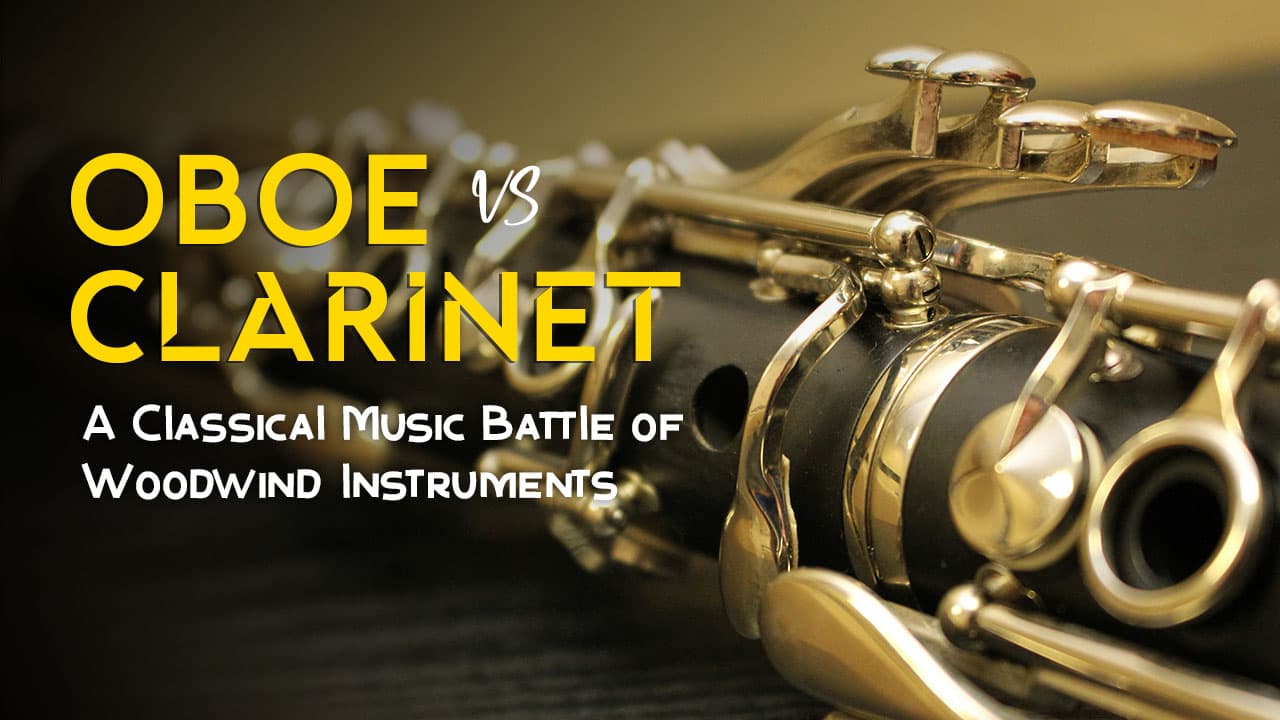
Double reeds use two reeds tied together that vibrate against each other — which is exactly why the oboe and bassoon have that haunting, reedy cry. The oboe, cor anglais, bassoon, and contrabassoon are the double-reed crew. If you want the full face-off on the two most famous double-reed cousins, I broke it down here: oboe vs clarinet.
The Common Woodwinds You Have Definitely Heard
Flute — the oldest design in the family and the bright voice floating over the top of an orchestra. Usually metal, played sideways.
Clarinet — the most common woodwind, period. Warm, woody, and it can go from a whisper to a wail. The backbone of concert bands and a jazz legend.
Saxophone — the cool one. Comes in a family of sizes (soprano, alto, tenor, baritone), and it is everywhere from jazz to rock to that one sax solo you cannot get out of your head. If you are shopping, I rounded up the best saxophones for beginners and pros.
Oboe — the double-reed with the piercing, expressive tone. It is also the instrument the whole orchestra tunes to.
Bassoon — the deep, slightly comedic, totally lovable low voice of the woodwinds.
Piccolo — basically a half-size flute that plays an octave higher. The highest voice in the orchestra and impossible to miss.
Recorder — the one you probably played in school. Simple, cheap, and a genuinely great first instrument for a kid.
The Less Common (and Just Plain Cool) Woodwinds
Past the orchestra regulars, the family gets wild:
- Bass clarinet and contrabassoon — the basement-dwellers, adding weight under everything.
- Cor anglais (English horn) — a lower, mellower oboe with a gorgeous, melancholy tone.
- Tin whistle and pan flute — folk staples you have heard in everything from Irish music to film scores.
- Harmonica — a free-reed pocket rocket. Reeds vibrate as you breathe in and out. If it is calling your name, here are the best harmonicas for beginners and pros.
- Bagpipes — reeds driven by a bag of air, so technically woodwind, and unmistakable from a mile away.
Wind Instruments vs Woodwind vs Brass
Quick clear-up, because this trips everyone. Wind instruments is the big umbrella, and it splits into two families: woodwind and brass. The difference is not what the instrument is made of — it is how you make the sound.
- Woodwind: sound comes from air moving across a reed or an edge. (Flute, clarinet, sax, oboe, bassoon.)
- Brass: sound comes from your lips buzzing into a mouthpiece. (Trumpet, trombone, French horn, tuba.)
That is why the saxophone is a woodwind even though it is made of brass, and why the (wooden) cornett of old was technically brass. It is about the reed or the lips, not the metal. Want to actually learn one of these? Lock your timing first with a free online metronome — it is the single best habit for any new player.
Frequently Asked Questions
Is the saxophone a woodwind or brass instrument?
The saxophone is a woodwind, even though it is made of brass. Instruments are classified by how they make sound, and the sax uses a single reed — not buzzing lips like a true brass instrument — so it belongs to the woodwind family.
What is the most common woodwind instrument?
The clarinet is generally considered the most common woodwind, thanks to its central role in concert bands, orchestras, and jazz. The flute and saxophone are close behind in popularity.
Name a woodwind instrument — what counts?
Any instrument that makes sound with a reed or by blowing across an opening: flute, piccolo, recorder, clarinet, saxophone, oboe, cor anglais, bassoon, contrabassoon, harmonica, and bagpipes all count.
What are reed instruments?
Reed instruments are woodwinds that use a vibrating reed to make sound. Single-reed instruments (clarinet, saxophone) use one reed; double-reed instruments (oboe, bassoon) use two reeds tied together.
The Bottom Line
The woodwind family looks huge until you see the trick: flutes have no reed, single-reeds have one, double-reeds have two. Learn those three buckets and you can place any woodwind you ever run into. I came to all of this as a guitar player who just loves how a great sax or clarinet line can lift a whole song — and if reading this nudges you to go pick one up, do it. Put the first foot forward.