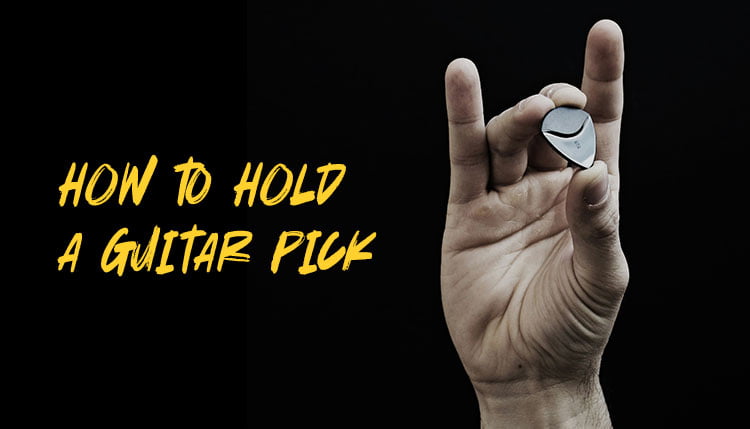
Basics of How to Hold a Guitar Pick
What is a guitar pick and why is it important?
Alright folks, so you went out and bought yourself some of the best guitar picks and you now need to know how to hold a guitar pick.
Those little guitar accessories, also called plectrums if you’re feeling fancy, are key to making your guitar sing.
They’re small, flat, and come in all sorts of shapes, sizes, and materials. Picks can totally change how your guitar sounds – think bright and crisp instead of mellow.
Plus, they let you play faster and with more control, which is a speedy player’s dream, especially in genres like rock or metal.
Different types of guitar picks (thickness, material, shape)
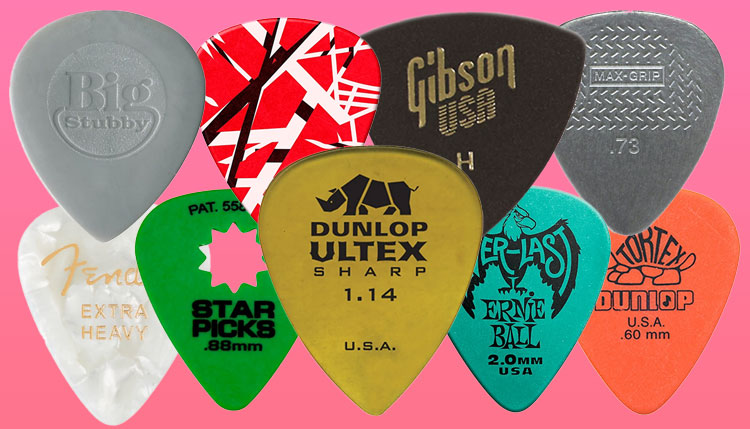
Picks are like shoes, there’s one for every occasion and taste. Whether it’s a matter of thickness, material, or shape, each type of pick can tweak how you attack the strings and how your music grooves.
Thickness:
- Thin (0.38 – 0.73 mm): Great for strumming with a nice, bright sound. Like sunshine in a pick!
- Medium (0.73 – 0.88 mm): The Swiss Army knife of picks—good for both strumming and picking out melodies.
- Thick (0.88 – 1.14 mm): Perfect if you’re the leader of the band—fuller sound, leaning on the bass side.
- Extra Thick (1.14 mm+): Built for the rock gods among us—more control for those epic solos.
| Thickness | Where It Shines | Sound Vibe |
|---|---|---|
| Thin (0.38 – 0.73 mm) | Strumming | Bright and shiny |
| Medium (0.73 – 0.88 mm) | Versatile | Balanced jam |
| Thick (0.88 – 1.14 mm) | Lead guitar | Deep and rich |
| Extra Thick (1.14 mm+) | Shredding solos | Total control |
Material:
- Plastic: The everyday hero, doesn’t break the bank.
- Nylon: Bends but doesn’t break—tough stuff!
- Tortex: Grip like a pro with consistent vibes.
- Metal: Crisp and clear, but mind the strings, they’re wear-tear magnets.
- Wood/Bone: Each one sings its own song, unique tones galore.
Shape:
- Standard (351): Your everyday go-to, trusty and true.
- Jazz (small and pointed): Hit those notes fast and furious.
- Triangle: A big player with more to hold onto.
The Impact of Pick Holding on Your Sound and Playing Style
How you clutch that little piece of plastic (or any other material—it’s your call) can really shake up your sound.
Hold too loosey-goosey, and your sound may be a bit wimpy. Grip it like it’s the last slice of pizza and you might tire out too soon.
Try changing the angle while you strike; angled for a warm vibe, flat for those crisp notes.
Play around with different ways of holding the pick, and unlock a whole bunch of cool sounds that can define your style.
Standard Guitar Pick Grip Techniques

Getting the hang of holding a guitar pick the right way can really amp up our playing style and sound and it’s just as important as knowing how to hold a guitar.
Let’s jump into the classic thumb and index finger grip, check out the steady three-finger technique, and chat about what’s great and not-so-great about each.
The Traditional Thumb and Index Finger Grip
The old-school thumb and index finger grip is the go-to way to clutch that pick.
Here’s how we can nail this technique:
- Set the pick on the top of our index finger.
- Lay our thumb over the pick, making sure the thicker part of the pick is snug between our thumb and index finger.
- Let about half an inch of the pick poke out from our fingers, giving just the right amount for picking or strumming away.
The secret to this grip is keeping it chill but secure. If we squeeze the pick like it’s life or death, our hand will end up saying “ouch.”
However, holding it too lightly and it’s bound to pop out mid-riff. Comfort is king, and it helps avoid the dreaded hand cramp.
Three-Finger Technique for Added Stability
For those of us needing a bit more grip, the three-finger technique is our friend. Here’s the lowdown on how to do it:
- Start by holding the pick just like with the traditional grip, between thumb and index finger.
- Bring in the middle finger to rest against the pick’s edge, adding extra backup.
- Move the middle finger to where it feels right, keeping comfort in mind.
This method is solid for steadying the pick when we’re doing complex or speedy tunes. It’s a lifesaver for anyone who feels like the traditional grip is as wobbly as a loose tooth.
Pros and Cons of Each Method
Every grip has its highs and lows. Let’s break it down:
| Method | Pros | Cons |
|---|---|---|
| Traditional Thumb and Index Finger Grip | Simple and beginner-friendly Offers movement flexibility |
Stability might be an issue for newbies Cramping if gripped too hard |
| Three-Finger Technique | More stability Great for tricky and fast tunes |
Can feel weird at first Less flexible compared to traditional grip |
By playing around with both grips, we can figure out which fits like a glove and gives us the best control. The aim is to pick a grip that boosts our skills and lets us rock our best as guitarists.
Step-by-Step Guide to Perfect Your Pick Grip
Nailing how to hold a guitar pick totally amps up our playing skills, making our sound smoother and our jamming sessions a lot more fun.
Ready? Let’s check out how to master this essential skill in a few easy steps!
Positioning the Pick Between Your Thumb and Index Finger
First off, we wanna make sure that pick is nestled right between our thumb and the outside of our index finger.
The tip of our index just chills there, pointing towards the sharp end of the pick but keeping it invisible like a stealthy ninja.
Keep the grip relaxed yet firm, so you’re not playing catch with the pick mid-song (this happens more than you’d think)!
| Aspect | Description |
|---|---|
| Finger Position | Index finger down, with the pick hugging between thumb and finger |
| Grip Pressure | Firm, not bone-crushing |
| Visibility | Index finger stays behind the star, the pick |
Finding the Right Angle for Optimal String Contact
The way we angle our pick can make or break the notes coming out of our guitar.
Tilt the pick so it hits the strings at a bit of an angle. This makes the pick slide across the strings with less effort, giving us that nice, clean sound we’re after.
Start around 45 degrees and see what works for you and the kind of tunes you’re playing.
| Aspect | Description |
|---|---|
| Pick Angle | Aim for around 45 degrees to the strings |
| Effect on Sound | Makes picking smoother and the tone cleaner |
Adjusting Grip Pressure for Different Playing Styles
Finding that sweet spot in grip pressure is key. Too tight, and your music comes out kinda aggressive; too loose, and the pick just might go flying.
Try for a strong but not death-grip level hold . Depending on what you’re playing, you might tweak this:
- Strumming: Keep it loosey-goosey for easy, free movements.
- Picking Single Notes: Grip closer to the pick tip and tighten up a bit for precision and control.
| Playing Style | Grip Adjustment |
|---|---|
| Strumming | Go looser for smooth sailing |
| Picking Single Notes | Tighten it up near the tip for serious control |
Mastering your pick grip is all about dialing in the right finger position, angle, and pressure.
With a little practice, we can make our guitar sing like never before and truly rock out.
Let’s keep jamming and find that perfect grip together!
Common Mistakes When Learning How to Hold a Guitar Pick

Getting the hang of holding a guitar pick can majorly change the way you play and sound. Let’s look into some usual slip-ups and how not to fall into them.
Gripping too tightly or too loosely
When you just learn how to play guitar a common mistake is grabbing the pick like it’s a lifeline or holding it like a feather.
A vice grip can make your hand and arm tense, slowing you down and making your playing jerky.
On the flip side, if you hold it too loose, you might watch it fly across the room mid-song—not good for showbiz.
Balancing that grip is what it’s all about. Just hold it snug but relaxed.
This not only keeps it from giving you hand cramps but also lets your hand dance over the strings smoothly, making you sound all the more pro.
| Grip Type | Description | Impact on Playing |
|---|---|---|
| Too Tight | Hand feels like a rigid claw | Slows down your shredding skills |
| Too Loose | Pick becomes a fleeting illusion | Causes awkward pauses |
| Balanced Grip | Easy hold, feels just right | Keeps everything chill and smooth |
Incorrect pick angle leading to poor tone
The direction your pick swings toward those strings can make or break your sound.
If you’re holding the pick straight up and down, it can make the music sound harsh and your hand movements feel like you’re fighting the strings. Tilting the pick a bit as you go helps keep things smooth.
Lift your pick onto your index finger, pinch it lightly with your thumb, and let your wrist drive the action. This way, it’s like getting the music mojo just right, mixing in some mellow tones along with control.
Inconsistent pick depth on strings
How deep you bury the pick in those strings can change everything from the vibe you give off to smashing that perfect note.
Too much pick can make finding the right note like finding a needle in a haystack, while too little might mean you’re not getting the juice out of your chords.
Different styles need different amounts of pick showing.
If strumming’s your game, let more of the pick shine. If you’re after sharp, precise notes, keep the pick tucked in a bit more.
Fancy pick designs can help keep a better grip, meaning fewer fumbles when you’re in the jam zone.
| Exposed Pick Surface | Suitable For | Impact on Playing |
|---|---|---|
| More | Strumming | Rich, full strum, great for big tunes |
| Less | Single-note picking | Snap and pop in every note |
When you dodge these typical traps, holding a guitar pick becomes simpler, setting you on the path to sounding like a seasoned rock star. By tweaking these little mishaps, we can all make playing guitar pure fun.
Advanced Pick Holding Techniques

Getting a handle on advanced pick holding techniques is like unlocking a hidden level in your guitar skills game.
These nifty methods – hybrid picking, edge picking, and palm muting – give us extra control, speed, and precision, making our playing much smoother and cleaner.
Hybrid Picking: Combining Pick and Fingerstyle
Imagine juggling and riding a unicycle at the same time – that’s kind of what hybrid picking feels like.
We use a pick with some fingers doing their own thing, which lets us tackle some pretty complex stuff.
Rock and country guitarists love it, and soon, you will too!
So, how do we get the hang of hybrid picking?
- Hold the pick just like always, using your thumb and index finger.
- Get the rest of your fingers (middle, ring, and pinky) to pluck away at the other strings.
- Mix things up by switching between pick work and finger plucking to create a smooth blend of sound.
It might take some time to get used to, but hybrid picking is like the Swiss army knife of guitar techniques—it opens up a world of possibilities.
Edge Picking for Speed and Precision
If you’ve ever wanted to zap through guitar tabs like a laser, edge picking might just be your ticket. By angling the pick, we can zip through notes faster and with more clarity. Metalheads and thrash players swear by it.
Here’s how to harness the power of edge picking:
- Keep a solid grip on the pick using your thumb and index finger.
- Tilt the pick so only its edge brushes the strings.
- Keep a steady hand to cut down on string buzz.
Edge picking is your go-to for those genres that demand lightning-fast picking. It’s like turning the pick into a speedboat slicing through the musical waves.
Palm Muting Techniques with Proper Pick Grip
Want to add some oomph to your playing? Palm muting lets us dampen the strings, giving our sound a tight and punchy vibe, perfect for rock and metal riffs. It’s all about that rhythmic chug.
Here’s how to master the palm muting technique:
- Hold the guitar pick with your thumb and index finger.
- Gently place the side of your palm on the strings near the bridge.
- Play around with how much pressure you’re putting on the strings to get just the right sound.
- Strum the strings while keeping the mute in place with your palm.
Nailing palm muting makes our sound pop off the strings with clarity. By fidgeting with palm pressure and position, we can tweak that percussive effect to perfection.
Bringing hybrid picking, edge picking, and palm muting into our guitar toolkit gives us newfound powers with the pick.
These techniques open up a whole new world of control and flexibility, pushing our skills to new heights. Happy strumming!
Exercises to Improve Your Pick Control
Nailing that pick control is the backbone of shredding for any guitarist worth their salt.
We’ve gathered some neat exercises to help us lock down our grip, sharpen our picking skills, and boost our stamina for longer jam sessions.
Single String Exercises for Consistency
Let’s kick things off with single string exercises. These are perfect for getting our picking hand to behave and hit those strings without missing a beat.
- Downstrokes Only: Yep, we stick to one string and it’s downstrokes all the way. Aim to keep the pressure and tempo consistent.
- Upstrokes Only: Flip it around with just upstrokes. It’s all about balancing out our overall technique.
- Up-Down Alternating: We switch between up and downstrokes on the same string, ensuring both hits are equally solid and under control.
Mix it up across different strings and speeds to keep the practice fresh. Here’s a quick cheat sheet to follow:
| Exercise | Time (min) | Speed (BPM) |
|---|---|---|
| Downstrokes Only | 5 | 60 – 120 |
| Upstrokes Only | 5 | 60 – 120 |
| Up-Down Alternating | 10 | 60 – 120 |
Alternate Picking Drills
Sticking the shift between up and downstrokes with alternate picking is where the fast, clean playing comes to life. Let’s dive into some drills to nail this skill:
- Chromatic Scale: Run a chromatic scale (frets 1-4) up each string using alternate picking.
- String Skipping: Bounce between strings (like 6th to 4th) to sharpen our accuracy.
- Scales and Arpeggios: Play various scales and arpeggios with alternate picking, keeping the time and tone in check.
Here’s another handy guide for our alternate picking sessions:
| Exercise | Time (min) | Speed (BPM) |
|---|---|---|
| Chromatic Scale | 10 | 80 – 140 |
| String Skipping | 10 | 60 – 120 |
| Scales and Arpeggios | 15 | 80 – 140 |
Strumming Patterns to Enhance Pick Grip Endurance
Strumming endurance is key for those rhythm parts that keep the band grooving. We’ll use various strumming patterns to work on that grip strength.
- Basic Down-Up Strum: Keep it basic with consistent down-up strumming on open chords.
- Island Strum Pattern: Try down, down-up, up-down-up. It’s a sweet pattern for nailing rhythm.
- 16th Note Strumming: Go all out with 16th notes, focusing on maintaining even pressure and smooth transitions.
And for strumming sessions, check this guide:
| Exercise | Time (min) | Speed (BPM) |
|---|---|---|
| Basic Down-Up Strum | 10 | 60 – 120 |
| Island Strum Pattern | 10 | 80 – 120 |
| 16th Note Strumming | 15 | 80 – 140 |
Stick with these exercises, and you’ll progressively get better at controlling your pick and stepping up your guitar technique.
Keep at it and before you know it, you’ll be handling that pick like a pro. Consistency and patience, that’s our secret sauce!
Choosing the Right Pick for Your Playing Style
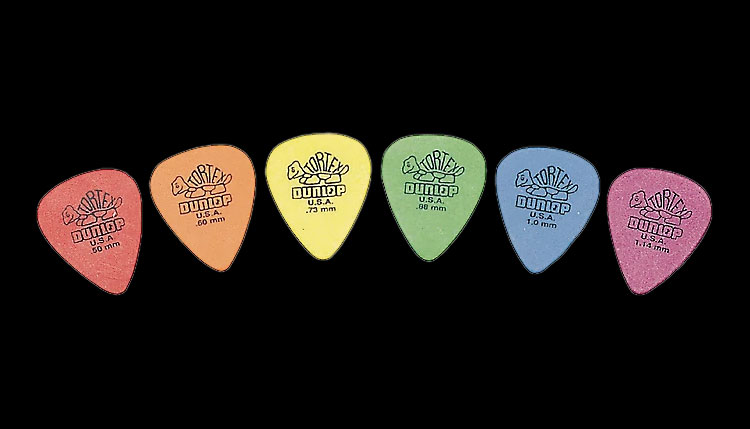
When you’re diving into the world of guitar playing, picking the right guitar pick isn’t just a trivial choice—it’s like choosing the right pair of shoes for a hike.
It can make your playing feel much better. Let’s break down how the thickness, material, and texture of your pick can change the way you play and sound.
How Pick Thickness Affects Your Grip and Tone
Guitar picks can be as varied as candy in a store. Different thicknesses give different feels, and knowing which suits you can really hit the right note.
| Pick Thickness | Best Use | Tone Characteristics |
|---|---|---|
| Thin (< 0.60 mm) | Strumming, acoustic | Bright sound, flexes with ease |
| Medium (0.60 – 0.80 mm) | Strumming and picking combo | Balanced sound, middle-of-the-road flexing |
| Heavy (> 0.80 mm) | Lead guitar, bass | Warm and precise, not so bendy |
Thin picks are like that old comfy sneaker—great for carefree strumming, perfect for that acoustic twang.
Medium picks are your all-terrain boots, ready for both strumming and picking, making them a fan-favorite for those who love variety.
Heavy picks are like steel-toed boots, offering a precise warm sound just right for those blazing solos or bass lines.
Material Considerations: Plastic vs. Metal vs. Wood
The stuff your pick is made of changes how it feels and sounds when you’re jamming out. Here’s a quick look at some common materials and their vibes.
| Material | Grip Characteristics | Tone Characteristics |
|---|---|---|
| Plastic | Smooth, shape-shifty | Bright, diverse tones (think nylon, Delrin) |
| Metal | Tough, slippy if slick | Bright and sharp tones |
| Wood | Feels earthy, natural grip | Warm and mellow tones |
Plastic picks are the bread and butter for many, sporting various textures and giving vibes from bright to flexible.
Metal picks are the rough-and-tumble types, loud and lasting, but can be slippery when not designed with texture.
Wood picks? They’re the organic option, offering a cozy, mellow tone, but might wear out faster than their tougher buddies.
Textured Picks for Better Grip Control
Textured picks give you more control, kind of like adding tires with better grip to your car for those tricky roads. These designs help your pick stay put even when you’re ripping through a song.
| Brand | Texture Description | Benefit |
|---|---|---|
| Dunlop Maxgrip Nylons | Bumpy surface | Locks in stability |
| Dunlop Flow Picks | Edged texture | Grip and glide smoothly |
| V-Picks | Sticky feel | Firm hold with relaxed grip |
The Dunlop Maxgrip Nylons’ texture feels like those snug gloves that keep you steady even with sweaty palms.
Dunlop Flow Picks come with an edge design, letting you glide through strings with finesse. And V-Picks’ stickiness is perfect for those who like a light-but-secure hold.
By playing around with different thicknesses, materials, and textures, we can find the pick that feels perfect in our hands and brings out the best in our playing style.
Adapting Your Pick Grip for Different Genres
Rock and Metal: Aggressive Picking Techniques
When it comes to rock and metal, you’ve got to bring out the big guns – fast and furious picking. For this, you’ll need a grip that’s solid and sure, like a rock (pun intended).
- Pick Selection: Go for the beefy ones – thicker, heavier picks that can stand up to a serious pounding. Try out different picks till you find your match made in rock heaven.
- Grip Techniques:
- Monster Grips: Slap on these grips for a tight clutch, but be warned, they might bulk up your pick a bit.
- Textured Picks: Get a better hold with picks like Dunlop Maxgrip nylons or Dunlop Flow.
- DIY Modifications: Crafty types might stick on some sandpaper or drill holes for extra grip. A little creativity goes a long way.
- Adjusting Pick Angle: Tweak the angle to keep it from slipping. If your fingers get too slick, the pick might take off for a joyride – we don’t want that!
Jazz: Lighter Touch and Quick Transitions
Jazz is a different beast. You need agility and a soft touch to dance through its complexities.
- Pick Selection: Choose medium to thin picks. They’re flexible, giving you that smooth jazz vibe.
- Grip Techniques:
- Light Grip Pressure: Keep it breezy. A gentle grip lets you skate across notes with ease.
- Thumb and Index Support: Let your thumb and index finger run the show, positioned close to the tip for finesse.
- Angle and Movement: Play with angles to let those notes sing without hammering them. Just a nudge here and there will do.
Country: Hybrid Picking and Chicken Pickin’
In country, it’s all about swagger and versatility. Hybrid picking and chicken pickin’ are your go-tos.
- Pick Selection: Aim for medium thickness – the Goldilocks of picks; just right for balance.
- Grip Techniques:
- Hybrid Picking: Work that pick and fingers together, keeping the middle and ring fingers ready to pluck.
- Chicken Pickin’: For that snappy, staccato vibe, mix a strong grip with flexibility.
- Angle and Pressure: Juggle it between strumming and plucking without a hitch. Keep your grip firm yet relaxed for those quick changes.
| Genre | Preferred Pick Thickness | Grip Techniques | Additional Tips |
|---|---|---|---|
| Rock & Metal | Thick | Monster grips, textured picks, DIY mods | Tweak angles, control pick slip |
| Jazz | Medium to Thin | Light grip, thumb & index finesse | Aim for subtle angles and smooth sailing |
| Country | Medium | Hybrid picking, chicken pickin’ | Balance control with flexibility, master transitions |
By tweaking your pick grip, you can level up your play across genres. Get cozy with the right pick thickness, grip style, and angles, and watch your sound hit all the right notes.
How to Hold a Guitar Pick Wrap Up
Congratulations! You now know how to hold a guitar pick like a pro. Remember, practice makes perfect – so grab that pick and start strumming!
Whether you’re aiming for lightning-fast solos or smooth, mellow tones, your newfound pick mastery will take your playing to the next level.
Don’t be surprised if your bandmates start asking for your secret!
Now go forth and shred with confidence. Who knows? The next guitar legend might just be you!